|
dedicated to the |
| Our Mission | Recommended Reading & Videos | Recommended Music | Asteroid/Comet/News Archive | How You Can Help | Our Sponsors |
Information |
News |
 CO2 parts per million Asteroid Fragmentation for Defense 34-page PDF paper at arxiv.org Killer Asteroid: defending Earth 48-minute documentary JPL/NASA Asteroid Watch Widget displays the next five Earth approaches within 7.5 million kilometres (4.6 million miles) NASA Planetary Defense early detection of potentially hazardous objects (PHO) How Do We Protect Earth From Asteroids? YouTube video by Fraser Cain, "Universe Today" NASA Near Earth Object Program list of Close Approaches Project Asteroid search telescope at Winer Observatory CBS "60 Minutes" video: Cosmic Roulette Discovery News videos: Asteroids and Meteorites video of meteor What are Comets and Asteroids? Do Comets Become Asteroids? QuickTime/WinMedia videos: Killer Comets and Ominous Asteroids The Asteroid Paradox (slow-loading 18MB file) Comet/Asteroid Investigation Jet Propulsion Laboratory efforts to track asteroids and comets. Large Impact Simulation requires Macromedia (now "Adobe") Flash Impact Calculator Animation of a planetary collision in the HD-172555 system 100 light-years from Earth, data for which were discovered in 2009 by the Spitzer Space Telescope. What are meteors and meteorites? What is a meteoroid? What is a bolide? What is a megaton TNT? Meteorite Impacts Frequently Asked Questions Earth's atmosphere The Threat to Earth from Asteroids and Comets Sizing Up the Asteroid Threat Asteroid and Comet Impact Hazards Earth Impact by an Asteroid Megatsunami, also known as Iminami, caused by impact The Torino Scale (revised 2005) Near-Earth Asteroids (NEA) Near-Earth Object (NEO) Threat NEO Information Centre Asteroid information from SEDS Asteroids or Volcanoes? Noah's Flood? Did a Comet Cause the Great Flood? 10 May 2807BC Bible Predictions Gamma-Ray Burst? National Geographic: Asteroids and Comets interactive web site: Earth Impact Effects Dinosaurs Died Within Hours Chicxulub impact crater Permian Extinction Evidence for a Large Impact Proposed Companion Star to the Sun Cause of Mass Extinctions on Earth? Tagish Lake Meteor/Fireball UWO site — NASA site Tunguska Event South American impacts Rio Curaca, Brasil (1930) Rupununi, Guyana (1935) Meteor Crater, Arizona Chesapeake Bay Impact Crater Terrestrial Impact Craters Crater Chains Earth Impact Database Meteor Crater Map fifty of Earth's most obvious meteor impact craters asteroid impacts, 1994-to-2013 more than 160 impacts identified since 1960 Types of Asteroids: Apohele — Apollo Amor — Atira — Aten Centaur — Cubewano Damocloid — Hilda Plutino — Trojan Vatira — Vulcanoid Porosity of Asteroids example: Asteroid 2011MD What is the Yarkovsky Effect? What is the YORP Effect? Main-Belt Asteroids (MBA) between Mars and Jupiter Discovery of MBA Kuiper Belt: comets & asteroids Oort Cloud of comets Comet images from the Solar and Heliospheric Observatory (SOHO) spacecraft. Small Comets Bring Water to Earth Frank-Sigwarth Theory Asteroid images from NASA Survive a Collision with an Asteroid What To Do Before the Asteroid Strikes Current Impact Risk combined total impact probability for all listed objects over the next hundred years: one in 13 Dealing with the Impact Hazard Keeping an Eye on Space Rocks Large Synoptic Survey Telescope (LSST) NASA/JPL Asteroid Watch Comet/Asteroid Archive Recommended Reading and Videos for more information Please visit our sponsors:   Advertise on this Site |
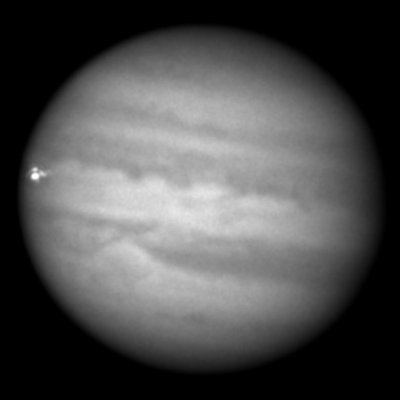
As of end-October 2012, individual news events are no longer being reported here. That former style has been replaced in 2013 by news links similar to those below : Asteroid 2020QG — close approach on 16 Aug 2020 NASA/FEMA Asteroid Emergency Planning Exercise, 4 Nov 2016 NASA - Total Solar Eclipse of Aug 2017 detailed path through USA of the 2017 Eclipse undiscovered planet linked to Kuiper Belt anomalies, and to periodic extinctions Radar-Detected Asteroids and Comets Popigai impact linked to Eocene extinction fresh (2010-2012) impact crater on Mars The Astronomer's Telegram (ATel) is for reporting and commenting upon observations of transient sources New evidence that cometary impact caused Younger Dryas extinctions — Phys.org Asteroid 2012 DA14 — close pass on 15 Feb 2013 Apophis: no impact in 2036 — NASA Doomsday Asteroid — from PBS Minor Planet Center — near-Earth objects lists Risk-listed objects recently in the news — from Columbine of Maine The Tracking News — astrometry from observers around the world Earth's Busy Neighborhood — Skychart and Object Details • October 2012Hundreds of witnesses on 17 Oct saw a bright fireball over the northern California coast, tracked by NASA/CAMS. — full story The 390-meter asteroid 2012 TO139 was discovered on 11 Oct by the Mount Lemmon Survey. Eventual impact probability is about one in 1.7 million with an impact energy of 13,000 megatons TNT. The small asteroid 2012 TM79 was discovered on 10 Oct by the Catalina Sky Survey one day after it had passed 57,000 miles (92,000 km) from Earth. The 700-meter asteroid 2012 TS78 was discovered on 8 Oct by the Mount Lemmon Survey. Eventual impact probability is about one in 2 million with an impact energy of 28,000 megatons TNT. The small asteroid 2012 TV was discovered on 5 Oct by the Tenagra Observatories two days before passing 158,000 miles (255,000 km) from Earth. Eventual impact probability is about one in 710,000 with an impact energy of 1.9 megatons TNT. The small asteroid 2012 TC4 was discovered on 4 Oct by Pan-STARRS eight days before it passed within 59,000 miles (95,000 km) of Earth. Eventual impact probability is about one in 450,000 with an impact energy of 130,000 tons TNT. • September 2012 Russia has declassified the discovery of a large deposit of impact diamonds in far-northern Siberia under Popigai crater about 170 miles (270 km) south of Nordvik. — full story Amateur astronomer George Hall (Dallas, Texas) recorded the impact of a small comet or asteroid on Jupiter, also reported visually by Dan Petersen (Racine, Wisconsin). — full story and video The small asteroid 2012 SY49 was discovered on 22 Sep by Sandlot Observatory six days before passing 624,000 miles (1 millon km) from Earth. Eventual impact probability is about one in 34,000 with an impact energy of 843,000 tons TNT. A large fireball seen over the UK on 21 Sep appears to have been an atmosphere-grazing asteroid that later fell to Earth. — full story — video The small asteroid 2012 RJ10 was discovered on 13 Sep by the Mount Lemmon Survey nine days after it had passed 1.2 million miles (2.0 millon km) from Earth. Eventual impact probability is about one in 27 million with an impact energy of 1.5 megatons TNT. • August 2012 The 83-meter asteroid 2012 QD8 was discovered on 17 Aug by Pan-STARRS three weeks before it passed 5.9 million miles (9.6 million km) from Earth. Eventual impact probability is about one in 22,000 with an impact energy of 51 megatons TNT. The small asteroid 2012 PB20 was discovered on 14 Aug by Pan-STARRS. Eventual impact probability is about one in 119,000 with an impact energy of 1.1 megatons TNT. The 64-meter asteroid 2012 PK24 was discovered on 13 Aug by Pan-STARRS four weeks before it passed 5.9 million miles (9.6 million km) from Earth. Eventual impact probability is about one in 24,000 with an impact energy of 11 megatons TNT. • July 2012 Multiple fireballs observed this month in China, Russia, Spain, Finland, Belarus, Cyprus, Syria, Turkey, Jordan, Israel, Lebanon, and Chile may be fragments from Comet 96P/Machholz, or from the annual Delta‑Aquariid meteor shower. — full story • June 2012 The small asteroid 2012 MF7 was discovered on 23 Jun by the Catalina Sky Survey two days after it had passed within 197,000 miles (317,000 km) of Earth. Eventual impact probability is about one in 7100 with an impact energy of 100,000 tons TNT. The asteroid 2012 LZ1, discovered on 10 Jun by the Siding Spring Survey four days before it passed within 3.4 million miles (5.4 million km) of Earth, is now thought to be one kilometer wide. — full story The small asteroid 2012 LJ was discovered on 9 Jun by the Mount Lemmon Survey one day before it passed 388,000 miles (625,000 km) from Earth. Eventual impact probability is about one in 476,000 with an impact energy of 1.3 megatons TNT. • May 2012 The small asteroid 2012 KT42 was discovered on 28 May by the Mount Lemmon Survey one day before it passed within 13,000 miles (21,000 km) of Earth. The small asteroid 2012 KP24 was discovered on 23 May by the Mount Lemmon Survey five days before it passed within 36,000 miles (57,000 km) of Earth. Eventual impact probability is about one in nine million with an impact energy of 240,000 tons TNT. • April 2012 The small asteroid 2012 HB25 was discovered on 24 Apr by Pan-STARRS seventeen days before it passed 2.6 million miles (4.2 million km) from Earth. Eventual impact probability is about one in 28,000 with an impact energy of 1.7 megatons TNT. Hundreds of eyewitnesses observed a fireball across northern Nevada and California on 22 Apr, thousands more heard the sonic boom. — full story and photo The 380-meter asteroid 2012 HG8 was discovered on 20 Apr by the Catalina Sky Survey. Eventual impact probability is about one in 625,000 with an impact energy of 5900 megatons TNT. The small asteroid 2012 HG2 was discovered on 20 Apr by the Catalina Sky Survey three days after it had passed 285,000 miles (459,000 km) from Earth. Eventual impact probability is about one in 9100 with an impact energy of 57,000 tons TNT. • March 2012 The 140-meter asteroid 2011 AG5 (risk-listed since January 2011) is currently in the news as a potential threat. The small asteroid 2012 FS35 was discovered on 25 Mar by the Catalina Sky Survey one day before it passed within 40,000 miles (64,400 km) of Earth. The 60-meter asteroid 2012 ES10 on 15 Mar by the Mount Lemmon Survey. Eventual impact probability is about one in 770,000 with an impact energy of 27 megatons TNT. • February 2012 The small asteroid 2012 DW60 was discovered on 29 Feb by Spacewatch twelve days before it passed 595,000 miles (958,000 km) from Earth. Eventual impact probability is about one in 6250 with an impact energy of 130,000 tons TNT. The small asteroid 2012 DJ54 was discovered on 27 Feb by Pan-STARRS five days after it had passed 354,000 miles (570,000 km) from Earth. Eventual impact probability is about one in 10,000 with an impact energy of 7000 tons TNT. The small asteroid 2012 DA14 was discovered on 23 Feb by La Sagra Observatory eight days after it had passed within 30,000 miles (48,000 km) of Earth. Eventual impact probability is about one in 3100 with an impact energy of 2.5 megatons TNT. The small asteroid 2012 CU was discovered on 2 Feb by LINEAR two days after it had passed within 576,000 miles (927,000 km) of Earth. Eventual impact probability is about one in 1.1 million with an impact energy of 460,000 tons TNT. • January 2012 The small asteroid 2012 BA102 was discovered on 30 Jan by LINEAR four days after it had passed 630,000 miles (1 million km) from Earth. Eventual impact probability is about one in 256,000 with an impact energy of 150,000 tons TNT. The 154-meter asteroid 2012 BJ86 was discovered on 29 Jan by the Mount Lemmon Survey. Eventual impact probability is about one in 910,000 with an impact energy of 250 megatons TNT. The small asteroid 2012 BX34 was discovered on 25 Jan by the Catalina Sky Survey two days before it passed within 40,600 miles (65,400 km) of Earth. The small asteroid 2012 BA77 was discovered on 24 Jan by Pan-STARRS. Eventual impact probability is about one in 59,000 with an impact energy of 500 megatons TNT. The small asteroid 2012 BL14 was discovered on 21 Jan by the Mount Lemmon Survey one day after it had passed within 287,000 miles (441,000 km) of Earth. Eventual impact probability is about one in 71,000 with an impact energy of 42,000 tons TNT. The small asteroid 2012 BY1 was discovered on 18 Jan by the Mount Lemmon Survey six days before it passed 487,000 miles (785,000 km) from Earth. Eventual impact probability is about one in 233,000 with an impact energy of 970,000 tons TNT. The small asteroid 2012 BU1 was discovered on 18 Jan by the Mount Lemmon Survey four days after it had passed within 870,000 miles (1.4 million km) of Earth. Eventual impact probability is about one in 7,700 with an impact energy of 31,000 tons TNT. The small asteroid 2012 AP10 was discovered on 11 Jan by the Mount Lemmon Survey twelve days after it had passed within 252,000 miles (406,000 km) of Earth. Eventual impact probability is about one in 11,000 with an impact energy of 120,000 tons TNT. • December 2011 The 210-meter asteroid 2011 YV62 was discovered on 30 Dec by the Mount Lemmon Survey. Eventual impact probability is about one in 14 million with an impact energy of 710 megatons TNT. The small asteroid 2011 YC40 was discovered on 29 Dec by the Mount Lemmon Survey one day after it had passed within 66,400 miles (106,900 km) of Earth. Eventual impact probability is about one in 290,000 with an impact energy of 2400 tons TNT. The 89-meter asteroid 2011 XC2 was discovered on 8 Dec by LINEAR five days after it had passed within 217,000 miles (349,000 km) of Earth. Eventual impact probability is about one in 200,000 with an impact energy of 63 megatons TNT. • November 2011 There is much excitement in the news about the 400-meter asteroid 2005 YU55 passing within 203,000 miles (327,000 km) of Earth on 8 Nov. However, this asteroid is not currently listed as a collision risk over the next hundred years. The 120-meter asteroid 2011 VG9 was discovered on 15 Nov by the Mount Lemmon Survey. Eventual impact probability is about one in 320,000 with an impact energy of 210 megatons TNT. • October 2011 The 75-meter asteroid 2011 UZ255 was discovered on 30 Oct by Spacewatch. Eventual impact probability is about one in 37,000 with an impact energy of 21 megatons TNT. The small asteroid 2011 UX255 was discovered on 30 Oct by the Mount Lemmon Survey two days after it had passed within 86,000 miles (140,000 km) of Earth. The small asteroid 2011 UL169 was discovered on 27 Oct by the Catalina Sky Survey one day after it had passed within 165,000 miles (265,000 km) of Earth. Eventual impact probability is about one in 83,000 with an impact energy of 14,000 tons TNT. The small asteroid 2011 UT was discovered on 17 Oct by Spacewatch five days before it passed within 141,000 miles (227,000 km) of Earth. The small asteroid 2011 TO was discovered on 1 Oct by LINEAR three days after it had passed within 80,000 miles (129,000 km) of Earth. Eventual impact probability is about one in 77,000 with an impact energy of 210,000 tons TNT. • September 2011 Analysis of data from the Wide-field Infrared Survey Explorer (WISE) has led researchers at the Jet Propulsion Laboratory to revise downward their estimate of the number of mid-size (100-to-1000 meters) near-Earth asteroids to 19500, of which 5200 have been found and are being tracked. — full story The small asteroid 2011 SO189 was discovered on 29 Sep by the Mount Lemmon Survey five days after it had passed 287,000 miles (463,000 km) from Earth. Eventual impact probability is about one in 9100 with an impact energy of 240,000 tons TNT. The small asteroid 2011 SM173 was discovered on 29 Sep by the Catalina Sky Survey one day before it passed within 181,000 miles (291,000 km) of Earth. Eventual impact probability is about one in 14,000 with an impact energy of 43,000 tons TNT. • August 2011 The 84-meter asteroid 2011 PE2 was discovered on 8 Aug by La Sagra Observatory nine days after it had passed within 833,000 miles (1.34 million km) of Earth. The small asteroid 2011 PU1 was discovered on 6 Aug by La Sagra Observatory thirteen days after it had passed 208,000 miles (336,000 km) from Earth. Eventual impact probability is about one in 5300 with an impact energy of 850,000 tons TNT. • June 2011 The small asteroid 2011 MX was discovered on 23 Jun by the Mount Lemmon Survey three days after it had passed within 596,000 miles (960,000 km) from Earth. Eventual impact probability is about one in 33,000 with an impact energy of 130,000 tons TNT. The small asteroid 2011 MD was discovered on 22 Jun by LINEAR five days before it passed within 12,000 miles (18,700 km) of Earth. • March 2011 The small asteroid 2011 FQ6 was discovered on 27 Mar by the Mount Lemmon Survey four days after it had passed within 367,000 miles (591,000 km) of Earth. Eventual impact probability is about one in 53,000 with an impact energy of 34,000 tons TNT. The small asteroid 2011 EB74 was discovered on 15 Mar by the Catalina Sky Survey one day before it passed 203,000 miles (327,000 km) from Earth. Eventual impact probability is about one in 3600 with an impact energy of 85,000 tons TNT. The small asteroid 2011 EY11 was discovered on 5 Mar by the Catalina Sky Survey two days before it passed 81,300 miles (131,000 km) from Earth. The small asteroid 2011 ES4 was discovered on 2 Mar by the Mount Lemmon Survey eleven days before it passed within 2.7 million miles (4.3 million km) of Earth. Eventual impact probability is about one in 26,000 with an impact energy of 460,000 tons TNT. • February 2011 The small asteroid 2011 DU9 was discovered on 27 Feb by La Sagra Observatory four days after it had passed within 179,000 miles (288,000 km) of Earth. Eventual impact probability is about one in 4800 with an impact energy of 120,000 tons TNT. The small asteroid 2011 CF66 was discovered on 13 Feb by the Mount Lemmon Survey seven days before it passed within 610,000 miles (982,000 km) of Earth. Eventual impact probability is about one in 71,000 with an impact energy of 45,000 tons TNT. The small asteroid 2011 CU46 was discovered on 11 Feb by LINEAR three days after it had passed within 1.1 million miles (1.7 million km) of Earth. Eventual impact probability is about one in 45,000 with an impact energy of 1.3 megatons TNT. The small asteroid 2011 CA7 was discovered on 7 Feb by the Mount Lemmon Survey two days before it passed within 64,000 miles (104,000 km) of Earth. Eventual impact probability is about one in 2.8 million with an impact energy of 820 tons TNT. The small asteroid 2011 CQ1 was discovered on 4 Feb by the Catalina Sky Survey fourteen hours before it passed within 7,300 miles (11,800 km) of Earth. • January 2011 The 180-meter asteroid 2011 BT59 was discovered on 30 Jan by Pan-STARRS. Eventual impact probability is about one in 4.2 million with an impact energy of 1600 megatons TNT. The small asteroid 2011 BL45 was discovered on 30 Jan by Pan-STARRS. Eventual impact probability is about one in 2100 with an impact energy of 40,000 tons TNT. The small asteroid 2011 BP40 was discovered on 30 Jan by Pan-STARRS. Eventual impact probability is about one in five million with an impact energy of 480,000 tons TNT. The small asteroid 2011 BW11 was discovered on 26 Jan by the Catalina Sky Survey one day after it had passed within 80,000 miles (129,000 km) of Earth. The 150-meter asteroid 2011 BT15 was discovered on 24 Jan by Pan-STARRS. Eventual impact probability is about one in 13,000 with an impact energy of 100 megatons TNT. The small asteroid 2011 BG10 was discovered on 23 Jan by the Mount Lemmon Survey nine days before it passed within 2.5 million miles (4.1 million km) of Earth. Eventual impact probability is about one in 120,000 with an impact energy of 280,000 tons TNT. The small asteroid 2011 AM37 was discovered on 13 Jan by the Catalina Sky Survey two days after it had passed within 80,000 miles (129,000 km) of Earth. The small asteroid 2011 AX22 was discovered on 10 Jan by the Catalina Sky Survey. Eventual impact probability is about one in 2000 with an impact energy of 2.2 megatons TNT. The small asteroid 2011 AH5 was discovered on 8 Jan by the Catalina Sky Survey five days before it passed within 799,000 miles (1.3 million km) of Earth. Eventual impact probability is about one in 40,000 with an impact energy of 370,000 tons TNT. The 140-meter asteroid 2011 AG5 was discovered on 8 Jan by the Mount Lemmon Survey. Eventual impact probability is about one in 500 with an impact energy of 110 megatons TNT. The small asteroid 2011 AD3 was discovered on 4 Jan by the Mount Lemmon Survey six days after it had passed 2.2 million miles (3.6 million km) from Earth. Eventual impact probability is about one in 8.3 million with an impact energy of 220,000 tons TNT. 87 Potentially Hazardous Asteroids discovered in 2010 Potentially Hazardous Asteroids (PHA) are defined as those with orbits within 4.65 million miles (7.5 million km) of Earth's orbit. Eighty-seven more PHA were discovered in 2010, bringing the total to 1177 known Potentially Hazardous Asteroids, more than three times those known in 2001. — full list News Archive Click here for archived articles. Advertise on this Site |
Our Mission |
How You Can Help |
Our mission is to ensure that there will be advance warning of asteroid or cometary impact in time for defensive action, by helping to obtain support for astronomers worldwide in their discovery of hazardous Near–Earth Objects. |
You can contribute your ideas, your energy, your resources, your products, or your money to this cause. Write to our about your support:  Please make a donation of any amount to the AstroGuard Foundation through PayPal — it's fast, free, and secure: |
|
Our thanks go to the following people for their contributions to this site:  Brian Dunn Brian Dunn
Paul Gregg Tom Standish |
 |
best viewed with:
 this site created with: KATE = KDE Advanced Text Editor 
|
| Recommended online SpaceTime music: |  |
 |
|
 |
 |
| Recommended e-mail provider: | "the Fastest Email Service on the Planet" |
Recommended spam fighter:  SpamCop
| Recommended web browsers: |  Opera Opera
|
 Firefox Firefox
|
 Comodo Dragon Comodo Dragon
|
 SLOOH
SLOOH
 UAP
UAP
 SETI
SETI
 WikipediA